Japan Preparing to Send Solar Power From Space to Earth Using Microwaves
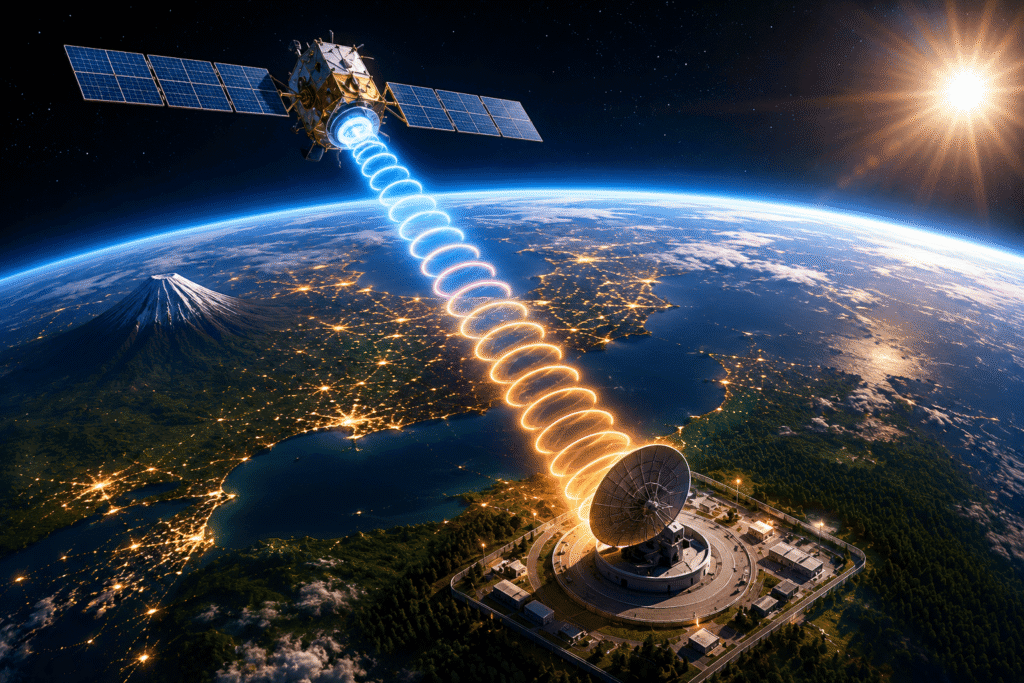
is moving closer to one of the world’s most futuristic clean-energy projects — generating solar power in space and wirelessly transmitting electricity back to Earth using microwaves.
The ambitious mission, known as OHISAMA, could become one of the first real-world demonstrations of space-based solar power technology.
How the Technology Will Work
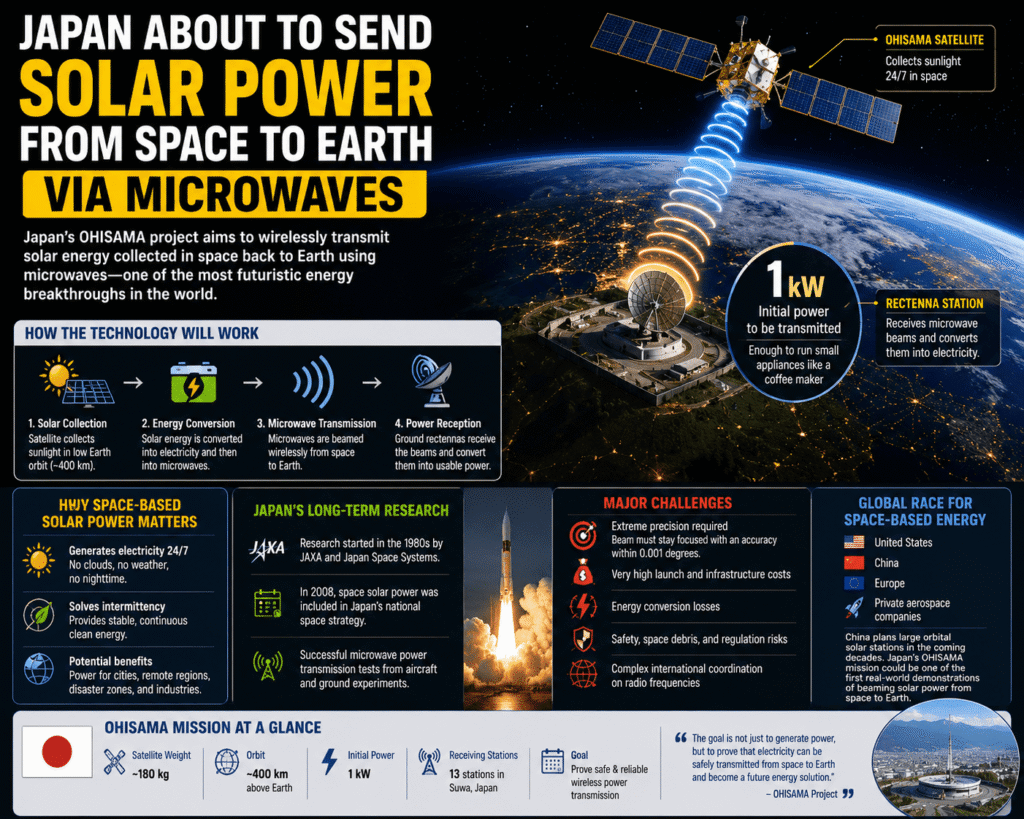
The concept involves launching a small satellite equipped with solar panels into low Earth orbit, approximately 400 kilometres above Earth.
Unlike traditional solar farms, the satellite will collect sunlight continuously in space without interruptions from:
- Clouds
- Weather conditions
- Day and night cycles
The collected solar energy will then be converted into microwaves and transmitted wirelessly toward Earth.
Ground-based receiving antennas, called rectennas, will capture the microwave beams and convert them back into usable electricity.
First Satellite Will Transmit 1 Kilowatt of Power
According to reports, the first OHISAMA demonstration satellite will weigh around 180 kilograms and initially transmit approximately 1 kilowatt of electricity.
That amount of power is enough to run small appliances such as:
- Coffee makers
- Small electronic devices
- Basic household equipment
Researchers say the primary goal of the mission is not large-scale power generation yet, but proving that wireless space-based electricity transmission can work safely and reliably.
Japan plans to beam the energy toward a network of 13 receiving stations located in Suwa, central Japan.
Why Space-Based Solar Power Is Important
One of the biggest limitations of renewable energy on Earth is intermittency.
Traditional solar and wind systems depend heavily on:
- Weather conditions
- Battery storage
- Sunlight availability
Space-based solar power could potentially solve this issue because satellites in orbit receive nearly constant sunlight 24 hours a day.
If successful at scale, the technology could provide:
- Continuous clean energy
- Power for remote regions
- Emergency electricity during disasters
- Energy for industrial infrastructure
- Stable renewable power for cities
Japan Has Been Researching This Since the 1980s
Japan has spent decades researching orbital solar power technology through:
- JAXA
- Japan Space Systems
In 2008, Japan officially added space solar power development to its national space strategy.
Researchers have already completed several microwave power transmission experiments using aircraft and ground-based systems.
Major Challenges Still Remain
Despite the excitement surrounding the project, experts say large-scale deployment remains extremely difficult and expensive.
One of the biggest technical challenges is precision targeting.
The microwave beam must remain accurately focused while the satellite travels at extremely high orbital speeds. Reports suggest the system requires aiming accuracy within 0.001 degrees.
Other major challenges include:
- High launch costs
- Building massive orbital structures
- Energy conversion losses
- Space debris risks
- International radio-frequency regulations
- Safety concerns
Some agencies, including NASA, have also questioned whether space-based solar power can become economically competitive with Earth-based renewable energy systems.
Global Competition for Orbital Solar Power
Japan is not the only country pursuing space-based energy systems.
Other major players investing in orbital solar technology include:
- United States
- China
- European space agencies
- Private aerospace companies
Reports suggest China is also planning much larger orbital solar stations in the coming decades.
Still, Japan’s OHISAMA mission could become one of the first successful demonstrations of transmitting solar electricity directly from space to Earth.